

Most business owners make the same mistake: they treat the eventual sale of their business as the retirement plan itself, instead of one piece of it. That single assumption creates a cascade of smaller errors, from underfunded personal accounts to outdated entity structures that quietly drain value every year.
The fix starts small. Longevity, inflation, and long-term care costs are consistently underestimated, and the IRS recommends regular plan check-ups to catch errors before they compound. Premier72 built The Retirement Bank Method™ around this exact problem: converting owner-dependent companies into transferable retirement assets long before a sale is on the table.
In the next 30 days, you can:
- Schedule a retirement and business plan check-up.
- Set up or increase an automatic contribution to a Solo 401(k) or IRA according to applicable contribution limits.
- Book a business valuation to see what your company is actually worth today, not what you assume it's worth.
Quick fact: Small firms routinely overestimate the cost and paperwork of running a retirement plan, which is often the real reason owners delay saving in the first place.
Key Takeaways
Owners who fund personal retirement accounts, formalize a valuation-driven exit plan, and correct compliance errors early avoid the largest retirement shortfalls.
| Point | Details |
|---|---|
| Don't bet on the sale alone | Build a separate, liquid retirement account so your future doesn't depend entirely on a business sale. |
| Start exit planning early | Begin formal exit and tax planning three to five years before you intend to sell or step back. |
| Match the account to your structure | Choose Solo 401(k), SEP-IRA, or SIMPLE IRA based on whether you have employees and how much you want to save. |
| Fix compliance issues now | Use IRS correction programs and regular plan check-ups instead of ignoring small plan errors. |
| Coordinate, don't compartmentalize | Premier72's Retirement Bank Method™ ties business valuation, tax planning, and retirement income into one coordinated plan. |
Table of Contents
- Top Common Retirement Planning Errors Owners Make
- Why These Retirement Saving Errors Hurt Owners More
- Practical Fixes for Retirement Planning Pitfalls
- Which Retirement Account Fits Your Ownership Structure?
- How Should Your Exit Plan Align With Taxes?
- Your 5-Year Retirement and Exit Checklist
- Treating Retirement Planning as Business Continuity
- How Premier72 Turns Business Value Into Retirement Income
- Frequently Asked Questions
- Sources
Top Common Retirement Planning Errors Owners Make
Owners don't make random mistakes. They make the same handful of mistakes, in roughly the same order, for the same reasons. Here's the ranked list.
- Overreliance on the business sale. Treating a future sale as the entire retirement plan leaves you exposed to market timing, buyer financing issues, and valuation shortfalls you can't control.
- Underfunding personal retirement accounts. Every dollar reinvested in the business instead of a Solo 401(k) or SEP-IRA is a dollar that misses years of compounding.
- Ignoring longevity and healthcare costs. A 65-year-old today may need three decades of income, and long-term care is rarely priced into the plan.
- Keeping an outdated entity structure. An S-corp or LLC structure chosen at startup can create tax drag a decade later that nobody revisits.
- Skipping owner-specific retirement vehicles. Many owners default to whatever plan is easiest instead of the one that maximizes contributions.
- Ignoring plan compliance issues. Small administrative errors, left uncorrected, become expensive problems at audit time.
- Overestimating business value. A number pulled from memory or an old offer is not a valuation.
- Leaning entirely on a CPA for strategy. CPAs handle compliance well; they rarely design coordinated retirement income or exit strategy.
Pro Tip: Bundle your annual plan check-up with a business valuation and an entity structure review. Reviewing all three together catches problems that show up only when you look at the full picture at once.
Why These Retirement Saving Errors Hurt Owners More
Owners carry a specific set of exposures employees don't. Your net worth is concentrated in an illiquid asset, your income depends on the business staying healthy, and any sale event triggers a complex tax situation all at once. That combination magnifies mistakes that would be minor for a salaried worker.
- Relying on a future sale means illiquidity and timing risk. A downturn the year you plan to sell can cut your proceeds substantially.
- Underfunding accounts means missed compounding and lost tax sheltering. Ground lost in your 50s is hard to recover in your 60s.
- Ignoring healthcare and longevity risk means a multi-decade retirement can outlast a plan built for a shorter horizon, as the three biggest mistakes in retirement planning analysis makes clear.
Quick fact: Center for Retirement Research findings show owners who take a "wait and see" approach to retirement savings miss years of compounding they can never fully recover.
Practical Fixes for Retirement Planning Pitfalls
Fixing these errors follows a logical order. Build liquidity first, then optimize the vehicle, then formalize the exit, then clean up compliance.
- 30 days: Open or fund a Solo 401(k), SEP-IRA, or IRA. Talk to a financial advisor about contribution limits for your income level.
- 3 months: Get a formal business valuation from a qualified valuation professional, not a guess based on industry rumors.
- 12 months: Review your entity structure with a CPA and estate attorney to catch tax drag from an outdated setup.
- 3 to 5 years: Formalize a written exit timeline, including succession options and a target sale structure.
Along the way, add specific protections most owners skip:
- Buy-sell agreements funded properly, so a partner's exit doesn't destabilize the business.
- Key-person insurance, so the loss of a critical employee doesn't tank valuation overnight.
- A documented personal financial protection plan that separates your household finances from the business.
Pro Tip: Before your first advisor meeting, gather three years of tax returns, your entity documents, and a rough asset list. That one packet turns a vague conversation into a working plan the same day.
Which Retirement Account Fits Your Ownership Structure?
If you're a solo owner with strong income, a Solo 401(k) usually wins on contribution room. If you have employees and want simplicity, a SIMPLE IRA often fits better. A SEP-IRA sits in between: generous limits, minimal paperwork, but contributions must match across eligible employees.
| Feature | Solo 401(k) | SEP-IRA | SIMPLE IRA |
|---|---|---|---|
| Contribution structure | Employee plus employer contributions, highest ceiling | Employer-only, percentage of compensation | Employee deferral plus required employer match |
| Admin complexity | Moderate, some filing once assets grow | Low, minimal paperwork | Low to moderate, annual notices required |
| Employee impact | None if truly solo | Must cover eligible employees equally | Must cover eligible employees, mandatory match |
| Loan availability | Often allowed | Not allowed | Not allowed |
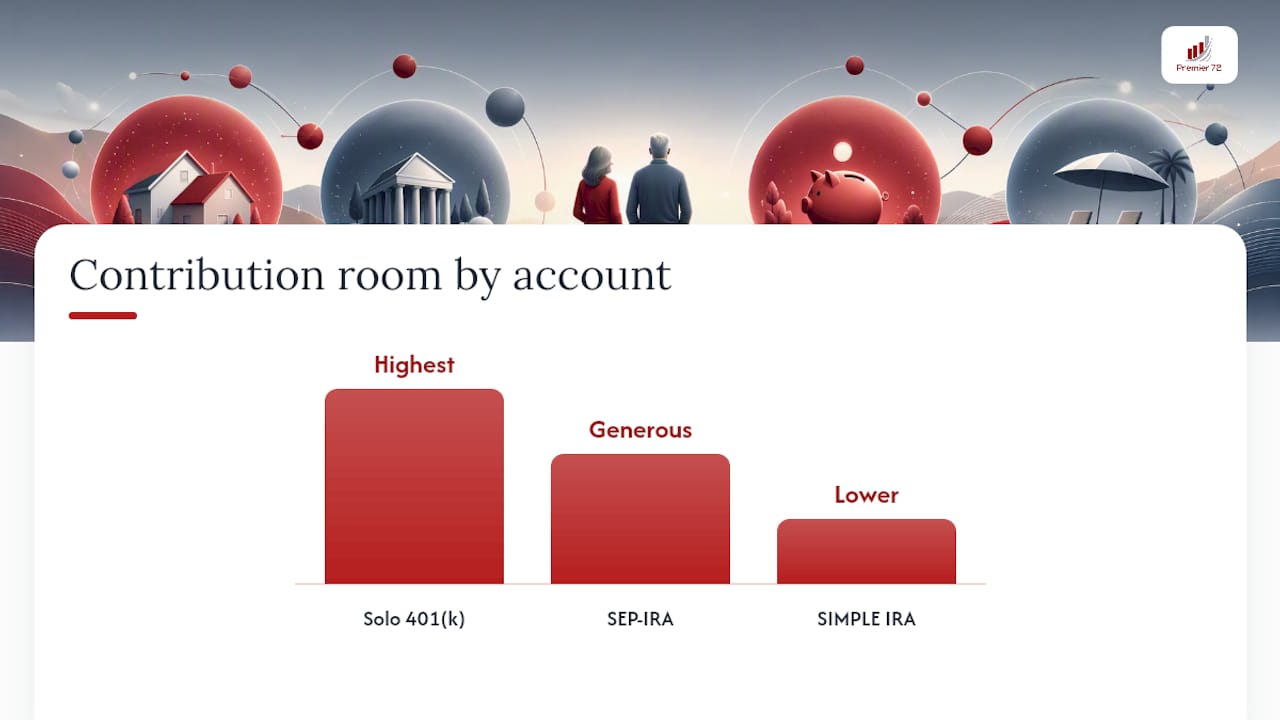
A Solo 401(k) rewards owners without employees who want to save aggressively. A SEP-IRA works for owners who want simplicity but still employ a small team. A SIMPLE IRA suits owners prioritizing low administrative overhead over maximum contributions. Whichever you choose, QuickBooks notes that treating personal savings and business value as parallel tracks, not one combined bet, is what actually protects your retirement.
How Should Your Exit Plan Align With Taxes?
Start exit planning three to five years before you intend to sell or step back, not the year you decide you're done. That window gives you time to coordinate installment sales, capital gains planning, Roth conversions, and RMD timing, instead of scrambling into decisions that cost you money.
- Document systems, leadership, and recurring revenue so the sale doesn't hinge entirely on you personally.
- Reduce owner-dependence well before a buyer starts due diligence.
- Talk to a CPA about installment sale structures if a lump-sum payout would push you into a higher bracket.
Investopedia's guidance is direct on this point: owners who wait until the year of sale to think about taxes routinely lose money they could have kept.
Your 5-Year Retirement and Exit Checklist
Treat this as a countdown, not a wish list.
- Year 5: Get a valuation and identify the gap between current worth and your retirement number.
- Year 3: Fix operational weaknesses and build a leadership bench that doesn't depend on you daily.
- Year 1: Maximize retirement account contributions and run a full compliance check.
- 12 months out: Finalize your exit structure, whether that's a sale, family succession, or management buyout.
- Target a personal savings ratio that doesn't depend on the sale to hit your number.
- Set a realistic multiple-of-EBITDA target instead of an assumed one.
Valuation and legal structuring typically need professional help. Starting retirement account contributions, you can do yourself, today, using the business retirement timeline roadmap as a guide.
Treating Retirement Planning as Business Continuity
I've come to see retirement planning and business continuity as the same conversation, not two separate ones. The Retirement Bank Method™ exists because owners who wait to separate the two usually discover the gap too late. Schedule a plan check-up, and bring your tax advisor, valuation numbers, and exit timeline to the same table.

How Premier72 Turns Business Value Into Retirement Income
Premier72 exists for the exact gap this article describes: the space between what your CPA files and what your retirement actually needs. Where a CPA keeps you compliant, Premier72 coordinates business valuation, exit timing, and retirement income design into one plan instead of three disconnected conversations.

Through The Retirement Bank Method™, Premier72 helps owners reduce dependence on themselves, strengthen the systems buyers actually pay for, and build retirement income strategies that don't hinge entirely on a future sale going perfectly. That includes buy-sell funding, key-person coverage, and insurance-based income planning built around your actual timeline, not a generic one.
If you're within five years of stepping back, or you simply haven't run a plan check-up in a while, schedule a discovery call with Premier72 and find out where your retirement plan actually stands.
Frequently Asked Questions
What is the most common retirement planning error owners make? Relying on a future business sale as the entire retirement plan is the most common mistake among owners, since it leaves no backup if the sale is delayed, undervalued, or falls through.
When should I start exit planning if I want to retire in five years? Start now. Three to five years gives you time to fix operational weaknesses, document systems, and coordinate tax strategy before a buyer starts asking questions.
Is a Solo 401(k) or SEP-IRA better for a business owner? A Solo 401(k) generally allows higher contributions for owners without employees, while a SEP-IRA works better if you have staff you must include in the plan.
How often should I review my retirement and business plan? Annually, at minimum, pairing a retirement plan check-up with a business valuation review so both numbers stay current with each other.
This article is general information, not a substitute for advice from a qualified financial advisor. Consult a qualified financial professional about your own circumstances before acting on anything here.
Sources
- The Three Biggest Retirement Planning Mistakes People Make
- Small Business Retirement Plans: A Primer – Center for Retirement Research
- Retirement plans for small entities and self-employed
- How to Retire When You Own a Business
- How to retire as a small business owner (QuickBooks)